Blog
Release date:May 31, 2026
Share:
Designing a safe, comfortable modular dormitory for 500–1,000 workers is one of the most important decisions in any engineering, procurement and construction camp project. When accommodation planning is weak, it can affect productivity, safety performance and workforce stability across the entire site.
For project managers and procurement managers working on infrastructure, energy and mining projects in remote regions, Chengdong offers an integrated path from planning to delivery for large-scale modular dormitories. The goal is not only to provide shelter, but to create a comfortable living environment for project personnel through coordinated planning, nine support systems and standardized modular building products.
These guidelines help decision-makers plan room types and densities in modular dormitories for 500–1,000 workers while meeting requirements for comfort, fire protection, utilities and long-term camp operation. For a broader view of engineering camp capabilities, visit the official website homepage of Chengdong Modular House.

In large engineering camps, worker housing is not a secondary issue. It directly affects schedule control, construction quality, workforce morale and site safety. Chengdong has completed more than 1,000 camp projects across more than 100 countries, showing that professional accommodation planning is a core part of successful camp delivery.
A large camp typically includes accommodation zones, public facilities and supporting infrastructure coordinated through nine integrated systems. When these systems are planned together, the modular dormitory layout can improve land efficiency, circulation safety and day-to-day living conditions for the workforce. Project teams that need a full engineering camp solution can start from the homepage of Chengdong Modular House.
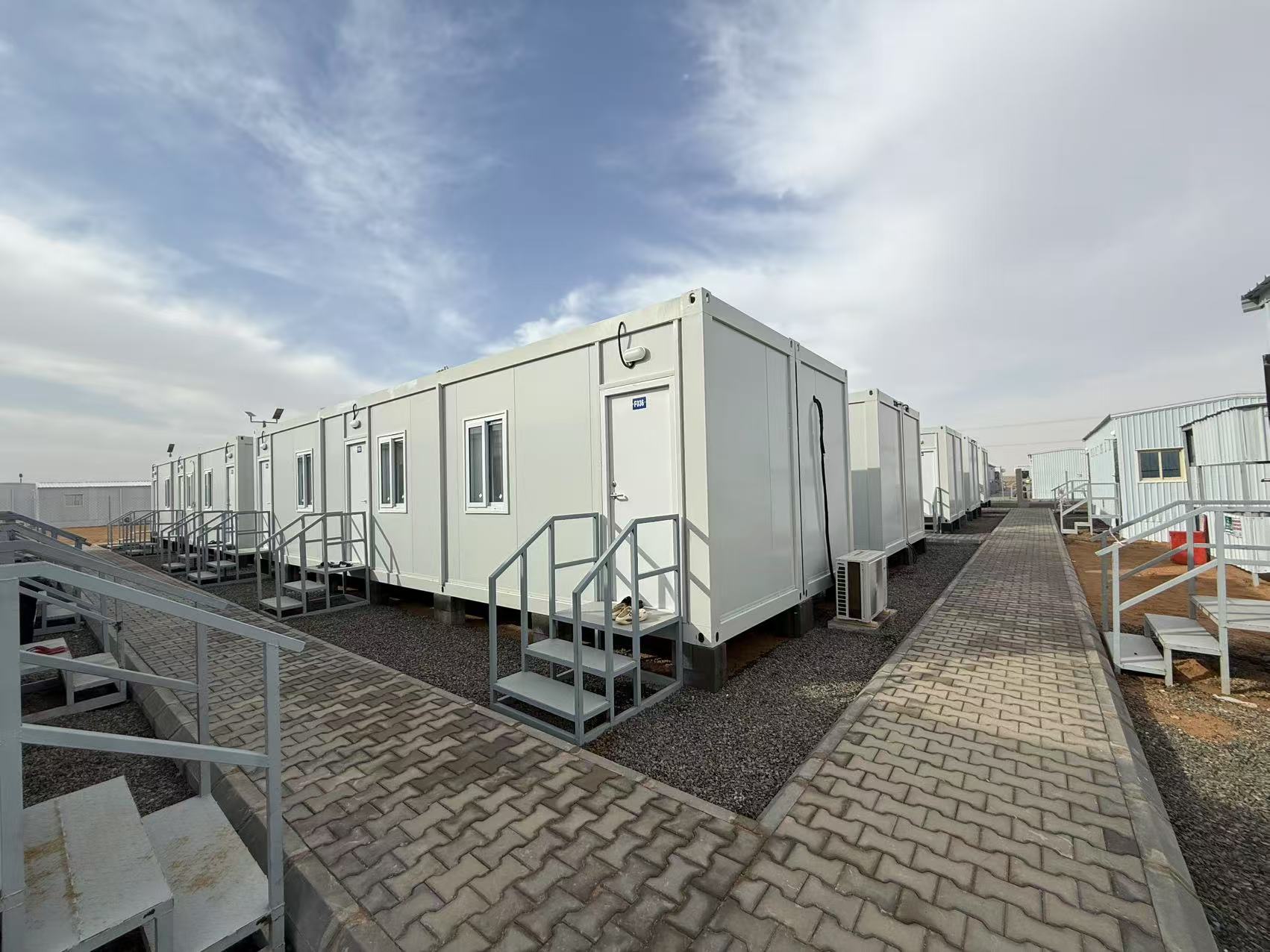
For a camp serving several hundred people, a practical accommodation strategy combines multiple room types with public-use functions and supporting infrastructure. This approach is especially important when a modular dormitory block must balance occupancy, privacy, comfort and future adjustment needs.
One large-camp configuration includes the following accommodation and public functions:
232 double rooms
145 single rooms
70 suite-type rooms
52 hostel-type rooms
A dining hall for 500 people
A gym for 100 people
A total planned building area of 42,800 m²
A plot ratio of 0.38
A greening rate of 17%
This type of allocation supports a mixed workforce structure, covering managers, engineers and general workers in one camp system. For projects in the 500–1,000 worker range, these figures can be adjusted to local conditions, but the principle of combining room types remains highly effective for building a scalable modular dormitory layout.
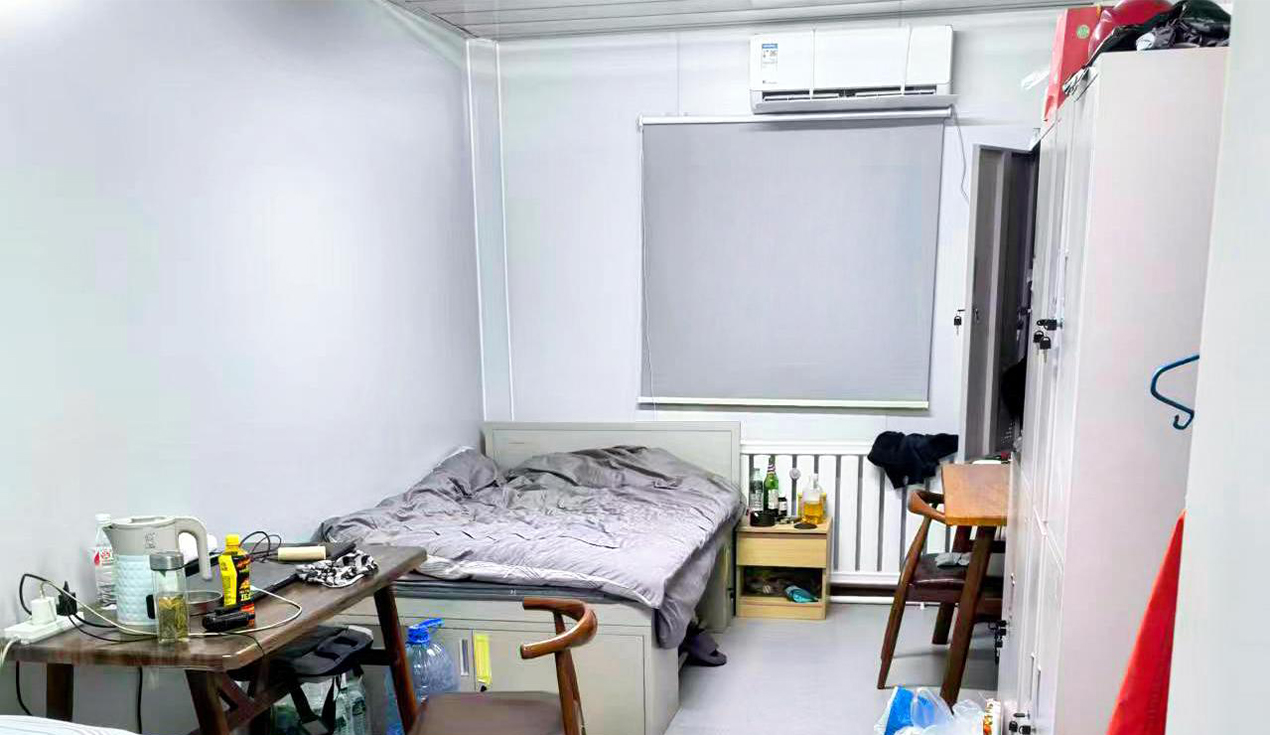
Single rooms are suitable for management staff, senior engineers and key technical personnel. They provide a quieter and more private environment, which supports concentration and decision-making in long-cycle EPC projects.
Double rooms often make up a major share of large-camp accommodation because they balance capacity and comfort effectively. They allow a modular dormitory to house more workers efficiently while still supporting basic rest quality for skilled labor and long-stay personnel.
Suite-type rooms can be used for senior managers or other personnel who require a higher accommodation standard during long-term camp operations. They also give project owners more flexibility when receiving partners, supervisors or visiting stakeholders on site.
Hostel-type rooms provide a higher-density solution for workers who can share a larger room arrangement. This format is useful during peak labor periods or in situations where project teams need to expand modular dormitories quickly without changing the overall camp structure.
By combining these room types in one modular dormitory system, project owners can match housing standards to role, contract type and project phase without rebuilding the camp. For product-level solutions related to worker housing, review the container house solutions in the Container House Product Center.

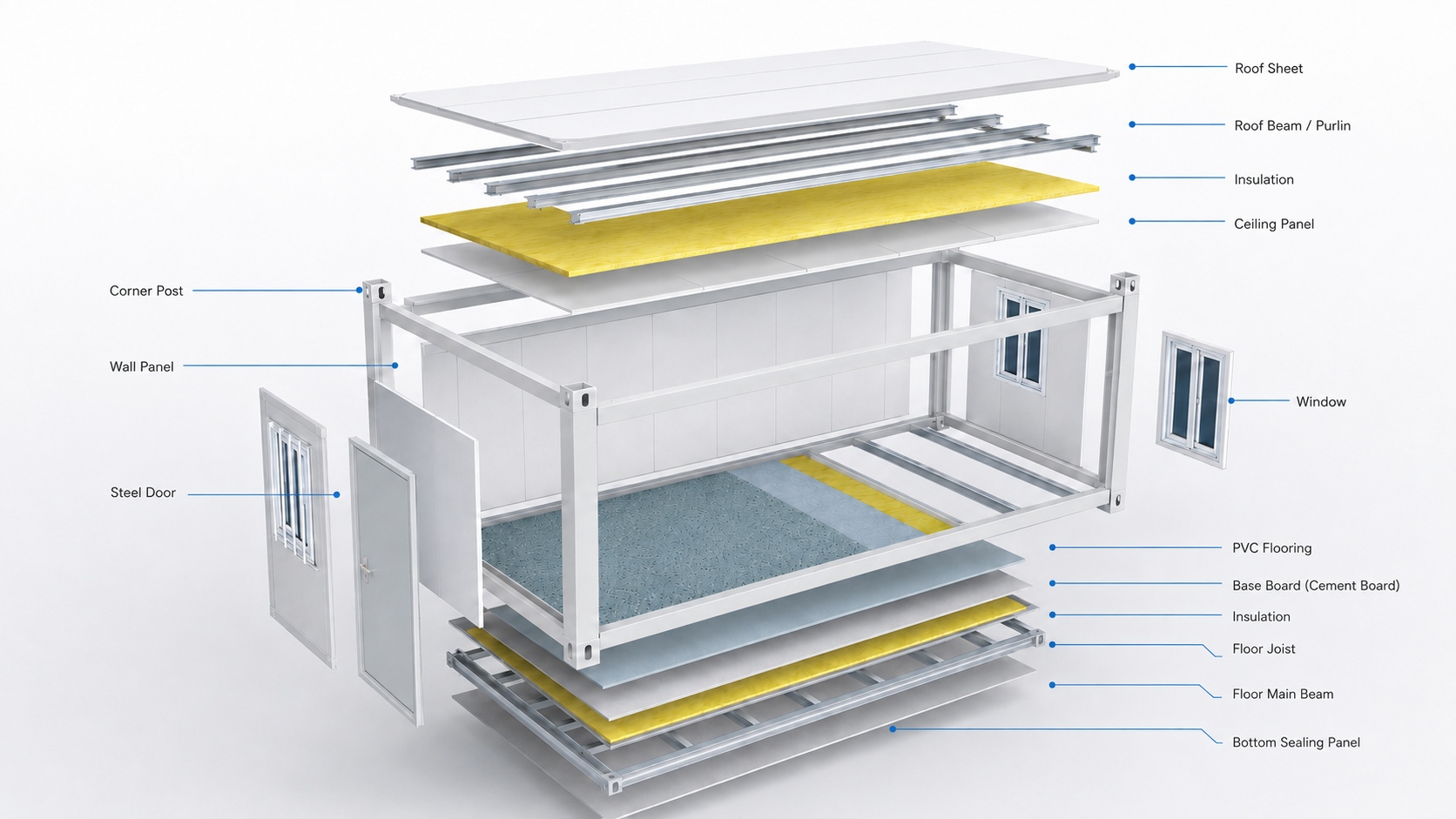
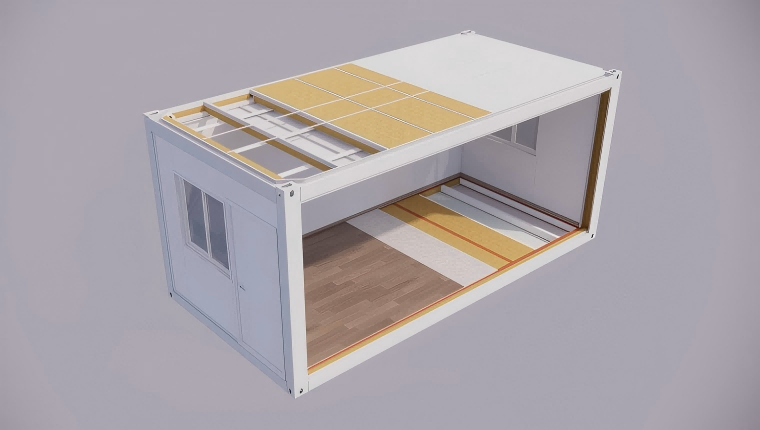
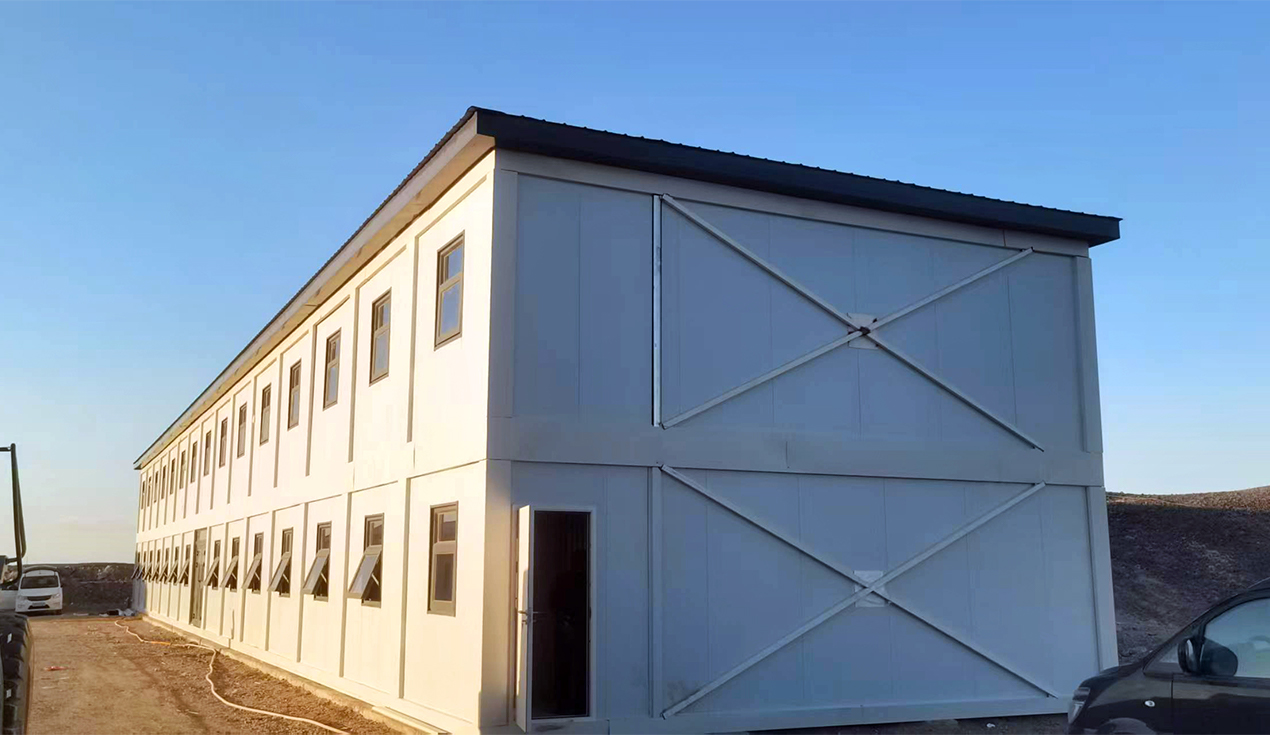
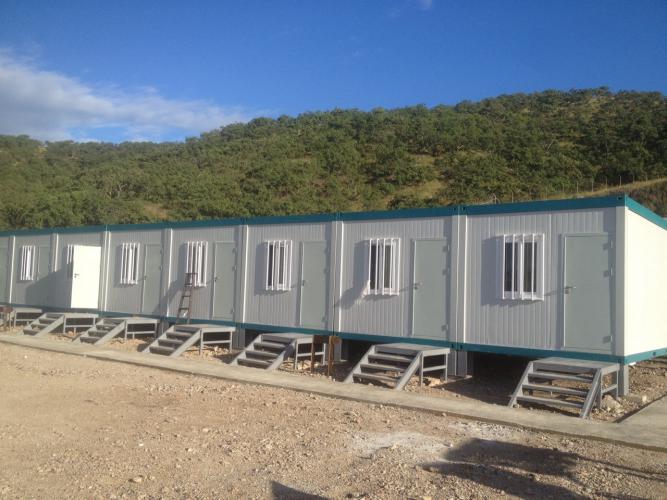
Chengdong’s modular dormitory buildings are based on prefabricated housing systems in which major components are manufactured in a standardized factory environment. Floors and roofs are highly integrated, allowing rapid installation on site according to functional requirements.
The standard product uses hot-dip galvanized structural members with a 60 μm anti-corrosion coating, together with insulation layers and integrated floor and roof assemblies. Wall panels use sandwich panels with 75 mm fiberglass insulation and a density of 55 kg/m³, helping improve both thermal and acoustic performance inside the modular dormitory.
Standard doors and windows include steel or plastic-steel components, and the standard sliding window size is 800 mm × 1,100 mm. The connector system uses bolts and K-type connectors, allowing panels to be removed and reinstalled without loss, which helps when a modular dormitory layout needs to be adjusted over time.
For procurement teams comparing product options for worker accommodation, these specifications can be matched with the container house solutions available in the Container House Product Center, where modular units are positioned as core products for camp housing.
In a modular dormitory designed for 500–1,000 workers, structural reliability is essential. Chengdong’s standard design includes anti-seismic measures and defined structural load capacities for residential use. The floor live load is 2.0 kN/m² and the roof live load is 1.0 kN/m².
Wind load capacity is 0.6 kN/m², while heat transfer coefficients for floors, roofs and wall panels are controlled in the range of about 0.46–0.64 W/m²·K depending on the component. These values support more stable indoor conditions and more efficient energy use, which matters in remote project locations where energy supply and operating cost are critical.
The modular housing system also uses anti-corrosion protection and durable finishes for long-term service in harsh environments. These product characteristics align with Chengdong’s CE-related certifications for steel structures under EN1090 and sandwich panels under EN14509.

A modular dormitory should never be planned as a standalone building. It must be integrated into the broader camp system so that housing, utilities, safety and environmental functions work together in daily operation. Chengdong organizes camp delivery around nine systems: building, water supply and drainage and heating, electrical power, weak current, fire protection, security, transportation and roads, environmental facilities and environmental protection.
For water infrastructure, one large-camp configuration includes a 36 m³/h water supply system with one duty pump and one backup pump, a 30 m³ water tank and a 10 m³/h water treatment unit. This type of utility planning is necessary when a modular dormitory cluster is expected to support hundreds of residents continuously.
The electrical system in the same type of configuration includes a 2,500 kVA transformer and a 1,000 kVA backup diesel generator. When power, water and building systems are planned together, the modular dormitory zone can operate more safely and avoid service bottlenecks during project execution.
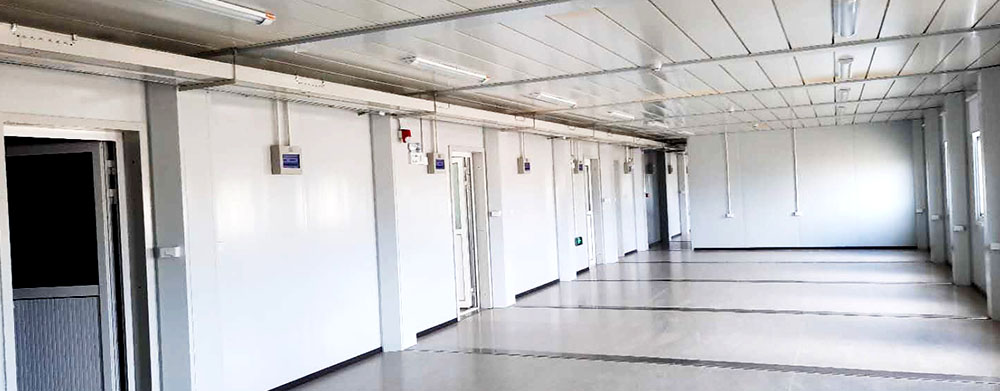
Large modular dormitories must meet strict fire-safety and evacuation requirements. Chengdong’s camp system includes fire alarms, firefighting tools, emergency lighting, hydrants, sprinklers and evacuation signs.
The intelligent fire alarm system includes wireless smoke detectors, temperature detectors, combustible gas detectors and light-and-sound alarms connected to a fire control center and mobile application functions. This approach reduces wiring needs, shortens installation time and lowers material and labor costs on remote sites.
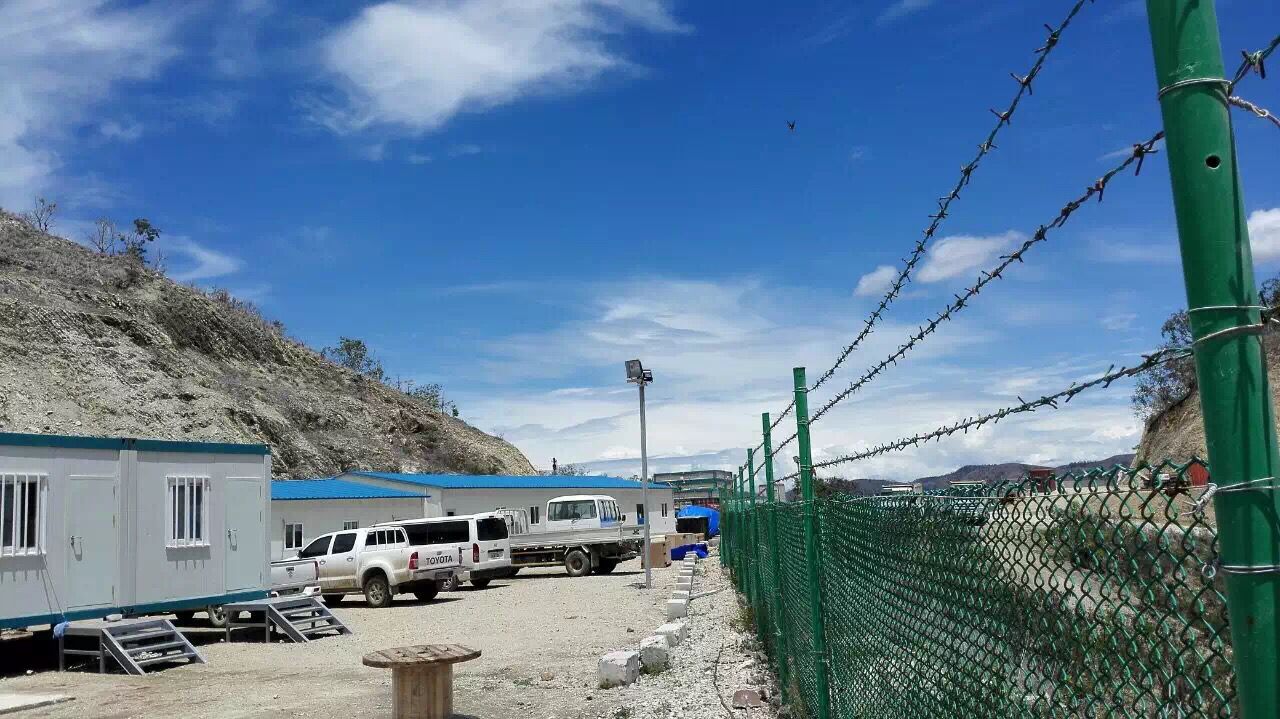
Security planning is also important in worker camps. Chengdong’s intelligent security system includes perimeter fencing, watch towers, CCTV monitoring, access control and intrusion alarms for key areas such as dormitories and important rooms. For a wider overview of integrated project camp capability, review the engineering camp solutions on Chengdong Modular House.
A modular dormitory must support not only occupancy targets but also acceptable living standards for workers over long project cycles. Chengdong’s camp planning includes green landscaping, sports areas and other open-use facilities that improve day-to-day living conditions in camp environments.
Inside the buildings, ecological lighting solutions such as LED lamps are used to improve efficiency and service life. Compared with energy-saving lamps and incandescent lamps, LED lamps in the camp documentation show longer service life and better suitability for frequent switching.
Bathroom facilities can use integrated prefabricated bathroom units in which the floor, walls, ceiling and fittings are industrially produced as one system. These integrated units save space, install quickly and can be reused multiple times without damage, making them suitable for ecological camp construction. For accommodation schemes that combine sanitary efficiency with standardized housing delivery, these solutions can be paired with container house solutions from the Container House Product Center as part of a modular dormitory strategy.

A relevant example for project teams is Chengdong’s South America hydropower camp work, where the company delivered an engineering camp including modular dormitories, offices and public-use buildings. The project was located far from urban centers and therefore required a self-sufficient accommodation and support system for a large workforce.
In that case, Chengdong combined modular housing with the nine-system approach to water, power, safety and environmental support. Dining, recreation and secure living areas were integrated into the camp so that workers and engineers had a safer and more comfortable long-term living environment during construction.
For project managers and procurement managers seeking a comparable reference, the hydropower camps in South America engineering case is available here: Hydropower Camps in South America.
Accommodation planning is only the starting point. Chengdong provides services that cover camp planning, design, product selection, logistics, on-site construction management and camp operation support.
Its technical teams are familiar with different national construction standards and can guide local labor during the installation process. In markets such as Argentina and Chile, Chengdong has demonstrated the capability to organize and manage local workers quickly to support project delivery.
For project owners seeking a one-stop partner, this model allows modular dormitory planning, product procurement, utility coordination and on-site execution to move through one integrated service chain. To begin that process, review the container house solutions and broader camp capabilities on Chengdong Modular House.
For EPC contractors and project owners, planning modular dormitories for 500–1,000 workers is a strategic decision that affects safety, efficiency and overall project performance. When room types, utilities, fire protection, public facilities and operating systems are planned together, a modular dormitory can become a stable and scalable foundation for the whole camp.
By combining standardized housing products, quantified planning data, integrated support systems and construction management capability, Chengdong provides a practical solution for large worker accommodation in remote and demanding environments. If a new project is entering the planning stage, now is the right time to review container house options in the Container House Product Center and request a tailored modular dormitory plan through the official site of Chengdong Modular House.
Scan the QR code to follow